 By
Manufacturing has long been the backbone of economic development and industrial growth. Today, the industry is undergoing a transformative shift, with modern production practices setting new benchmarks for efficiency, sustainability, and innovation. This article delves into how industry manufacturing is redefining production processes and reshaping the global landscape.
1. The Rise of Smart Factories
The integration of digital technology has ushered in an era of smart factories. These advanced facilities leverage the Internet of Things (IoT), artificial intelligence (AI), and cloud computing to optimize operations and enhance productivity.
IoT devices enable seamless communication between machinery, sensors, and systems, creating a connected ecosystem where real-time data is used to monitor and manage production lines. AI adds a layer of intelligence by analyzing patterns and predicting potential disruptions, allowing manufacturers to act preemptively. Cloud computing ensures that data is accessible and secure, facilitating collaboration across teams and locations.
Smart factories represent a paradigm shift, where production is driven by precision, adaptability, and data-informed decision-making.
2. Automation as the Backbone of Efficiency
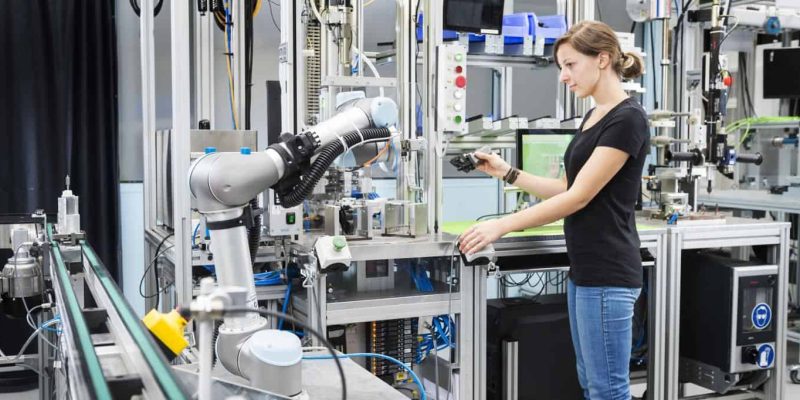
Automation has become synonymous with modern manufacturing. By delegating repetitive and labor-intensive tasks to machines, manufacturers can achieve higher efficiency and consistent quality.
Robotics, a key player in automation, handles tasks ranging from assembly to packaging with unparalleled speed and accuracy. This reduces the risk of errors and enhances the scalability of operations. Moreover, automation minimizes reliance on manual labor, which can be costly and prone to fatigue.
Investing in automation not only boosts operational efficiency but also frees human resources to focus on more strategic and creative aspects of production.
3. Customization and Agile Manufacturing
Gone are the days of one-size-fits-all production. Modern consumers demand personalized products, and manufacturers are responding with customization and agile manufacturing practices.
Customization allows companies to tailor products to specific customer preferences, from design features to functionality. Agile manufacturing supports this by enabling swift adjustments to production lines without compromising efficiency. This flexibility ensures that businesses can cater to niche markets and adapt to changing demands.
By embracing customization, manufacturers enhance customer satisfaction while positioning themselves as responsive and innovative.
4. Sustainable Practices in Production
Sustainability has become a defining characteristic of modern manufacturing. Companies are prioritizing eco-friendly practices to reduce their environmental footprint and align with consumer expectations for responsible production.
This shift includes using renewable energy sources, such as solar and wind power, to run manufacturing operations. Waste reduction initiatives, including recycling and resource optimization, further contribute to sustainability goals. Additionally, circular manufacturing—where products are designed for reuse or recycling—has gained momentum as a sustainable approach to production.
Sustainability is not just a trend; it is a commitment that reinforces brand reputation and long-term viability.
5. Digital Twins and Virtual Prototyping
The concept of digital twins has revolutionized how manufacturers approach product development and production planning. A digital twin is a virtual representation of a physical product, process, or system, allowing manufacturers to simulate and test scenarios before implementing them in the real world.
This technology enables manufacturers to identify potential issues, optimize designs, and reduce development costs. Virtual prototyping enhances this process by creating detailed models that can be adjusted and refined without the need for physical trials.
The ability to test and perfect production processes in a virtual environment saves time, resources, and ensures precision in execution.
6. Enhanced Supply Chain Integration
A robust and integrated supply chain is essential for modern manufacturing success. Advances in technology have improved transparency, efficiency, and collaboration across the supply chain network.
Digital supply chain tools allow manufacturers to track raw materials, monitor inventory levels, and predict potential disruptions. Blockchain technology adds an extra layer of security by ensuring traceability and authenticity in the supply chain. This fosters trust and minimizes risks associated with counterfeit materials or delayed shipments.
Efficient supply chain integration supports timely production and delivery, ensuring that manufacturers meet customer expectations consistently.
7. Workforce Transformation through Upskilling
As manufacturing becomes more technologically advanced, the role of the workforce is evolving. Upskilling employees is critical to bridging the gap between traditional practices and modern demands.
Manufacturers are investing in training programs to equip their workforce with the skills needed to operate advanced machinery, analyze data, and maintain complex systems. Beyond technical expertise, fostering a culture of collaboration and adaptability ensures that employees contribute to innovation and problem-solving.
A skilled and motivated workforce is a cornerstone of successful manufacturing in today’s rapidly changing environment.
8. Resilience through Risk Management
The past few years have highlighted the importance of resilience in manufacturing. From supply chain disruptions to global economic shifts, manufacturers must be prepared to navigate uncertainties.
Effective risk management strategies involve identifying vulnerabilities, diversifying suppliers, and building contingency plans. The use of predictive analytics and scenario modeling enables manufacturers to anticipate potential challenges and develop proactive solutions.
Resilience is about more than survival; it ensures continuity and positions manufacturers to thrive amid uncertainty.
9. The Role of Collaboration and Partnerships
Collaboration has become a driving force in redefining modern manufacturing. By forming strategic partnerships with technology providers, research institutions, and industry peers, manufacturers can access new ideas, resources, and markets.
These collaborations often lead to innovative solutions, such as co-developing new technologies or exploring emerging trends. Open communication and shared goals are essential to the success of such partnerships, fostering a sense of mutual growth.
Collaboration strengthens a manufacturer’s position in the industry, ensuring they remain competitive and forward-thinking.
Shaping the Future of Production
Industry manufacturing is experiencing a profound transformation, driven by advancements in technology, sustainability, and strategic adaptability. By embracing these modern practices, manufacturers are setting new benchmarks for efficiency, quality, and innovation. The future of production lies in continuous improvement, where businesses redefine possibilities and meet the demands of an ever-changing world.