 By
Drinking from a young coconut and eating a piece of firm coconut flesh can feel like different experiences. One gives you a light, sweet drink and soft flesh you can lift out with a spoon. The other needs more chewing and has the rich flavour people often associate with coconut cakes and biscuits. The age of the fruit helps explain the difference.
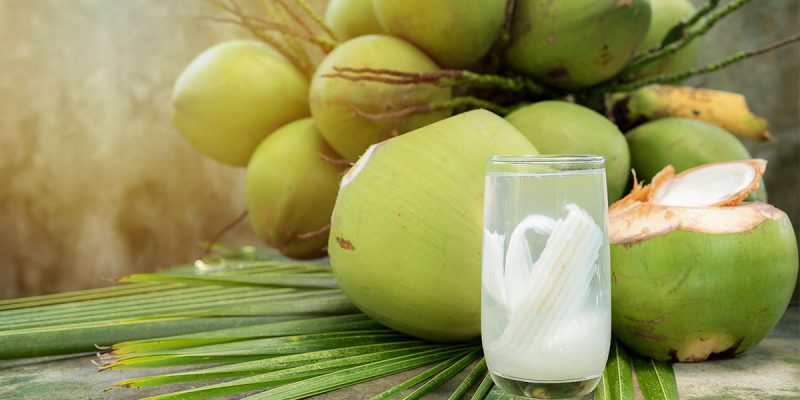
A Thai aromatic young coconut is chosen for drinking while it is still young. Nam Hom is the fragrant variety often associated with this style of coconut, with an aroma that can bring pandan or cooked jasmine rice to mind. Its flavour comes from the variety as well as the stage at which it is harvested.
Young drinking coconuts are commonly picked at about six to seven months. Mature coconuts stay on the palm for longer, allowing a thicker layer of flesh to develop inside the shell.
What changes as the coconut grows
Inside a developing coconut, the flesh begins as a thin, soft layer. As the fruit matures, that layer becomes thicker and firmer, and its oil content rises. The amount of water also changes. That is why an older coconut offers a different balance of drink and flesh from a young one.
The soft flesh of a young coconut can be almost jelly-like. It is pleasant eaten straight from the shell after you finish the water, particularly if you enjoy a delicate texture. A more developed young coconut may have flesh that is thicker and easier to lift out in pieces, so even two young coconuts need not feel identical.
The white, pointed coconuts sold in shops have usually had their outer husk trimmed. That neat shape is preparation for sale, rather than the way they grow on the palm. A mature coconut may be sold with its fibrous outer covering removed too, leaving the familiar hard brown shell.
Different coconuts for different dishes
Mature coconut is useful when you want substantial flesh to grate or shred. It can be used in baking or prepared for dishes where a firmer coconut texture is welcome. The flesh also provides the starting material for coconut milk and cream.
Coconut milk is different from the water you drink through a straw. It is extracted from grated flesh, often with water added during the process, which gives it the white appearance and richness used in cooking. Pouring young coconut water into a curry will not produce the same sauce.
For desserts, tender young flesh is lovely with fruit or as part of a chilled sweet dish. It adds soft pieces you can eat with a spoon, while grated mature coconut gives a different bite. Choosing between them is much like choosing other ingredients for their texture as well as their flavour.
If you order a young coconut as a drink, ask for a spoon as well as a straw. There may be soft flesh worth enjoying after the water is gone. You can taste a little on its own first, then decide whether you would like to scoop out the rest.