 By
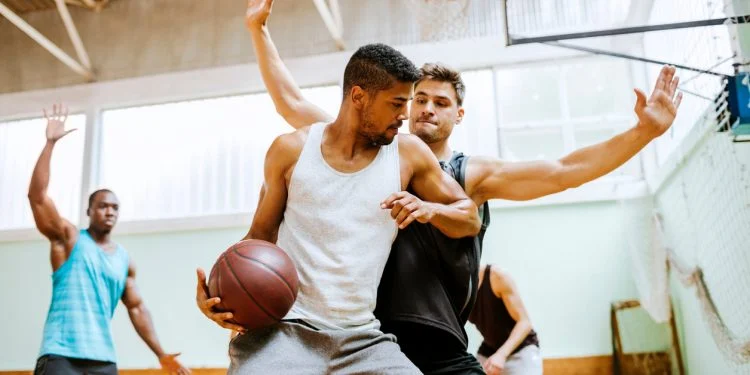
Basketball is universally recognized as one of the most demanding team sports in the world. It requires a rare combination of explosive speed, supreme cardiovascular endurance, pinpoint hand-eye coordination, and relentless agility. Because the game transitions in a split second from a full-court sprint to a defensive slide or a high vertical jump, players must condition their bodies to handle constant multi-directional stress. Consequently, rigorous basketball training develops a comprehensive athletic profile that extends far beyond the hardwood floor. Athletes from soccer players to track sprinters incorporate basketball drills into their conditioning programs to build exceptional physical prowess. Committing to a structured basketball training regimen transforms raw physical potential into elite, game-ready performance.
Developing Explosive Power and Vertical Jump
The ability to elevate high above the rim or explode past a defender depends heavily on lower body power development. Basketball training places heavy emphasis on plyometrics and fast-twitch muscle recruitment.
-
Plyometric Depth Jumps: Executing repeated box jumps and explosive leaps trains the neuromuscular system to store and release elastic energy efficiently, drastically increasing vertical jump height.
-
Reactive Strength Training: Quick-stop movements and immediate counter-movement jumps teach leg muscles to transition rapidly from deceleration to maximum upward propulsion.
-
Calf and Ankle Conditioning: Continuous sprinting and pivoting on the court strengthen the lower leg complex, providing the stable foundation needed for powerful takeoff mechanics.
Enhancing Multi-Directional Agility and Footwork
Unlike linear running sports, basketball requires constant changes of direction at high speeds. Players must shuffle laterally, backpedal, pivot, and burst forward with absolute control.
-
Defensive Sliding Drills: Maintaining a low athletic stance while sliding laterally builds immense hip mobility, glute strength, and core stability, which translates directly to superior lateral quickness.
-
Cone Agility Patterns: Weaving through multi-directional ladder drills and cone courses improves foot-eye coordination and body control during rapid shifts in momentum.
-
Deceleration Mastery: Learning how to brake forcefully without losing balance protects the knee joints and allows players to execute sharp cuts and sudden crossovers under control.
Boosting Cardiovascular and Anaerobic Conditioning
Basketball is characterized by high-intensity anaerobic bursts interspersed with brief periods of active recovery. This unique metabolic demand conditions the heart and lungs to handle extreme stress.
-
High-Intensity Interval Training: Running baseline-to-baseline sprints mimics the stop-and-start nature of a real game, pushing the cardiovascular system to recover rapidly under lactic acid buildup.
-
Stamina Under Fatigue: Training drills executed while fatigued teach the body to maintain precise skill execution, shooting form, and mental focus when energy reserves are depleted.
-
Maximal Oxygen Uptake: Sustained court sessions improve overall aerobic capacity, ensuring that athletes maintain high work rates throughout extended training sessions or competitive matches.
Refining Hand-Eye Coordination and Spatial Awareness
Athletic performance is not solely about raw strength and speed; it also relies on how quickly the brain processes visual cues and coordinates physical reactions.
-
Ball-Handling Complexities: Dribbling two basketballs simultaneously or utilizing tennis ball distraction drills sharpens peripheral vision and accelerates cognitive processing speed.
-
Spatial Tracking: Reading passing lanes, tracking airborne balls, and anticipating opponent movements in tight spaces enhances overall motor control and reaction time.
-
Proprioception Development: The constant need to balance while absorbing contact builds deep neuromuscular awareness of body positioning in space.
Building Core Stability and Injury Resilience
A strong core is the engine of all athletic movement. Basketball training forces the abdominal and lower back muscles to stabilize the spine against constant rotational forces and physical contact.
-
Rotational Power Transfer: Twisting to pass or shoot requires dynamic core rotation, building functional abdominal strength that protects the spine from injury.
-
Ankle and Knee Stability: Single-leg balancing and landing mechanics strengthen stabilizing ligaments and tendons, significantly reducing the risk of sprains and strains.
-
Contact Absorption: Absorbing physical bumps in the paint builds upper body and trunk resilience, making athletes more durable across any athletic discipline.
Frequently Asked Questions
Can basketball training help non-basketball players improve their sport?
Athletes in sports like tennis, football, and martial arts benefit immensely from basketball training because it builds rapid lateral agility, explosive first-step quickness, and superior hand-eye coordination.
How many days a week should an athlete train specifically for basketball conditioning?
Integrating two to three dedicated basketball conditioning sessions per week is generally sufficient for off-season athletes, allowing adequate time for muscular recovery and growth between intense workouts.
What is the best way to prevent ankle injuries during high-intensity court drills?
Wearing high-top supportive basketball shoes, performing dedicated ankle-strengthening balance exercises, and practicing proper two-foot landing mechanics are the best ways to prevent common ankle sprains.
Does dribbling two basketballs actually improve game performance?
Dribbling two balls simultaneously overloads the cognitive and motor systems, forcing the brain to process information faster, which ultimately makes single-ball handling during a live game feel effortless.
How does shooting a basketball contribute to overall upper body strength?
The mechanics of shooting a jump shot require coordinated kinetic linkage starting from the legs, traveling through the core, and finishing with wrist and forearm extension, building functional upper body power.
What role does nutrition play in recovering from grueling basketball workouts?
Consuming a balanced ratio of complex carbohydrates to restore glycogen stores and lean proteins to repair muscle tissue within forty-eight minutes after training is vital for optimal recovery.
Why is defensive sliding considered one of the hardest conditioning drills?
Defensive sliding requires maintaining a deep squat position while executing rapid lateral steps, which places continuous tension on the quads, glutes, and hips, causing rapid muscle fatigue.