 By
Carbon steel kitchen knives are celebrated by professional chefs and home cooking enthusiasts alike for their exceptional sharpness, ease of sharpening, and incredible edge retention. Unlike stainless steel counterparts, carbon steel contains a higher percentage of iron and carbon without the large amounts of chromium that prevent oxidation. This unique metallurgy allows the blade to take on a razor-thin edge that glides effortlessly through vegetables, meats, and herbs. However, this high performance requires a trade-off. Carbon steel is susceptible to rust and staining if neglected. Mastering the proper techniques for cleaning, drying, oiling, and storing your carbon steel blades ensures that these prized kitchen tools remain in peak condition for decades.
Understanding the Anatomy of Carbon Steel Care
To properly maintain a carbon steel knife, you must first understand how the metal interacts with its environment. When exposed to moisture, acids, and oxygen, iron molecules react quickly, forming red rust, which can pit and permanently damage the steel.
-
The Formation of Patina: Over time, exposure to acidic foods like citrus, onions, and tomatoes will cause the blade to develop a dark, discolored finish known as a patina. Unlike destructive red rust, a healthy patina is non-reactive, stable, and acts as a protective shield against future corrosion.
-
The Danger of Red Rust: Red, flaky rust indicates active oxidation and must be removed immediately. Leaving rust on a blade will weaken the structural integrity and eventually ruin the cutting edge.
-
The Golden Rule of Dryness: Moisture is the absolute enemy of carbon steel. Establishing a strict routine of washing and drying your knife immediately after every single use is the single most important habit you can develop.
Daily Cleaning and Drying Protocols
Proper daily maintenance takes only a few seconds, but it dictates whether your knife survives heavy kitchen use or succumbs to premature degradation.
-
Hand Wash Only: Never, under any circumstances, place a carbon steel knife in a dishwashing machine. The harsh alkaline detergents, intense heat, and prolonged water exposure will ruin the handle and corrode the blade within minutes.
-
Use Mild Dish Soap: Wash the blade gently using warm water, a small amount of mild dish soap, and a soft sponge or cloth. Avoid abrasive scouring pads that can scratch the polished metal surface.
-
Wipe Completely Dry: Immediately after rinsing, take a clean, dry microfiber towel and wipe the entire blade and handle from heel to tip. Pay special attention to the area where the blade meets the handle, as trapped moisture tends to accumulate there.
-
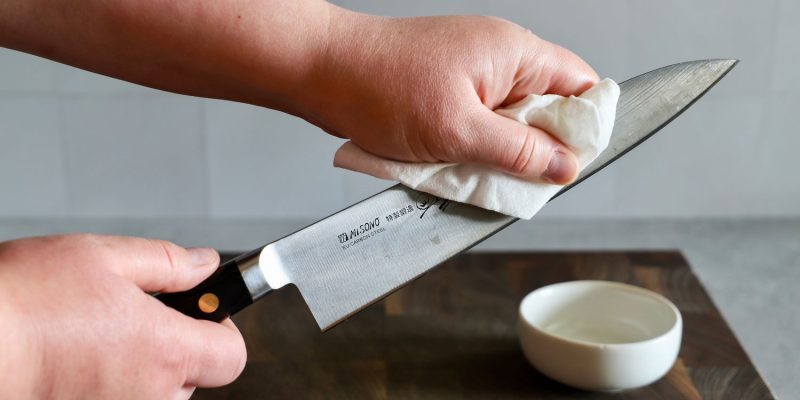
Apply a Protective Oil Layer: Once the knife is completely bone dry, apply a drop of food-safe mineral oil, camellia oil, or beeswax to a paper towel and rub a thin film across both sides of the blade to block ambient humidity.
Preventing and Removing Rust and Stains
Even with careful habits, minor neglect can occasionally lead to rust spots or stubborn oxidation marks. Addressing these issues swiftly prevents deep structural damage.
-
Treating Light Rust Spots: For minor surface rust, apply a small amount of baking soda mixed with a few drops of water to create a gentle paste. Rub the paste onto the affected area with a soft cloth until the rust lifts away.
-
Using Non-Abrasive Erasers: Specialized rust eraser blocks work wonders on carbon steel blades. Gently buff the rusty spots using linear motions that follow the original satin finish of the steel.
-
Neutralizing Acidic Residue: If you have been slicing high-acid ingredients like lemons or pineapples, rinse the blade under tap water mid-prep to prevent the acid from etching into the metal before you finish cooking.
Sharpening and Honing for Peak Performance
A well-maintained carbon steel blade holds its edge remarkably well, but regular upkeep is required to keep it cutting like a razor.
-
Frequent Honing with a Steel: Use a fine ceramic honing rod or a smooth steel rod before or after cooking sessions to realign microscopic burrs along the edge without removing precious metal.
-
Water Stones for Sharpening: When the edge eventually dulls, use traditional Japanese water stones ranging from medium to fine grits. Carbon steel is relatively soft compared to hard ceramic stones, making the sharpening process fast and satisfying.
-
Maintain the Factory Bevel: Keep a steady hand and match the original manufacturer angle while drawing the blade across the wet stone to preserve the geometry and cutting efficiency of the knife.
Safe Storage Practices
Improper storage can ruin an otherwise pristine knife by causing accidental edge chipping or moisture accumulation.
-
Avoid Magnetic Strips in Humid Rooms: While magnetic wooden knife bars are convenient, ensure your kitchen environment is not excessively humid, or opt for wall mounts with smooth protective coverings.
-
Use Edge Guards or Saya Sheaths: If storing knives inside a crowded kitchen drawer, always slip a custom wooden saya sheath or a plastic blade guard over the edge to prevent dulling contact with other utensils.
-
Choose Breathable Wooden Blocks: Traditional slanted wooden knife blocks work well, provided the knives are one hundred percent dry before being slid back into their respective slots.
Frequently Asked Questions
Can I use olive oil or vegetable oil to protect my carbon steel knife?
You should avoid using organic cooking oils like olive, vegetable, or canola oil for long-term blade storage. These oils contain fats that eventually turn rancid, become sticky, and attract dust and bacteria over time. Always use food-grade mineral oil or camellia oil instead.
What should I do if my carbon steel knife develops a metallic smell?
A metallic odor is common when handling high-iron blades, especially when cutting acidic foods. This smell usually diminishes as the knife develops a stable patina. Washing the blade with warm water and lemon juice, followed by thorough drying, helps neutralize lingering odors.
Is it safe to cut frozen foods or bones with a carbon steel knife?
Never use a carbon steel kitchen knife to cut through frozen ingredients, dense bones, or hard squash centers. Carbon steel blades are prized for their thin, high-performance geometry, which makes them vulnerable to chipping or snapping under heavy lateral torque.
Why does my carbon steel knife turn black when cutting onions?
Onions contain natural sulfur compounds and acids that react rapidly with the iron in carbon steel. This chemical reaction accelerates the formation of a dark patina, which is completely harmless and actually protects the underlying metal from rust.
How can I restore a dull, heavily pitted carbon steel blade found at a flea market?
Restoring an old or neglected blade requires coarse sandpaper or diamond sharpening plates to grind away deep pits and heavy red rust, followed by progressively finer grits to polish the steel back to a smooth, functional finish.
Are carbon steel knives more difficult to use than stainless steel ones?
Carbon steel knives are not more difficult to use during food preparation; in fact, their superior sharpness often makes cutting easier. The only added difficulty lies in the post-use cleaning and drying routine required to prevent corrosion.
Can a carbon steel knife be left soaking in the sink with other dishes?
Leaving a carbon steel knife to soak in water is one of the most damaging mistakes you can make. Even a brief ten-minute soak can lead to severe rust formation, waterlogged wooden handles, and irreversible pitting along the blade edge.