 By
Businesses today operate in a digital landscape where customer information flows across systems, devices, and networks. As cyber threats grow in complexity, organizations depend heavily on Information Technology (IT) to ensure that sensitive data remains secure. Beyond preventing breaches, IT teams play a strategic role in building trust, maintaining compliance, and safeguarding long-term business reputation.
Why Protecting Customer Data Matters
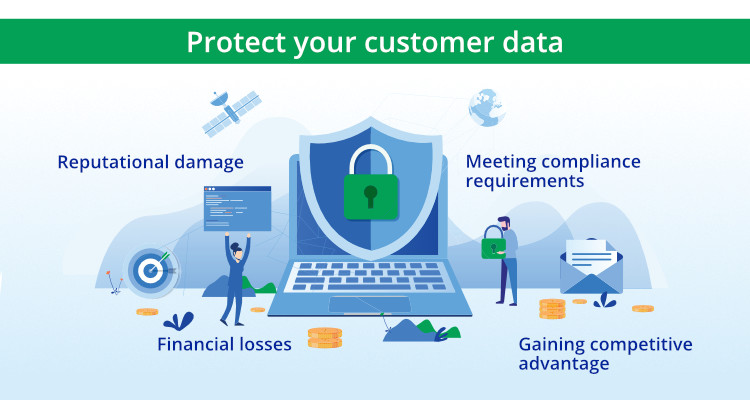
The importance of securing customer information extends far beyond avoiding financial losses. Strong data protection practices contribute to:
-
Maintaining consumer trust
-
Complying with data protection laws
-
Ensuring operational continuity
-
Enhancing brand reputation
-
Preventing identity theft and fraud
When businesses fail to protect data, they risk legal consequences, financial penalties, and long-term damage to customer relationships.
How IT Supports Customer Data Protection
1. Building and Maintaining Secure Infrastructure
IT departments design the technological foundation that supports secure data flow. This includes:
-
Well-configured firewalls
-
Encrypted communication channels
-
Secure cloud environments
-
Robust network architecture
A strong infrastructure reduces vulnerabilities and limits unauthorized access.
2. Implementing Advanced Encryption
Encryption ensures that even if data is intercepted, it remains unreadable. IT professionals apply:
-
Encryption-at-rest to secure stored data
-
Encryption-in-transit to protect transferred data
-
Industry-standard cryptographic protocols to reinforce security
This transforms sensitive information into secure, unusable formats for anyone lacking the proper decryption keys.
3. Monitoring Systems for Threats
Artificial intelligence and automated tools help IT teams:
-
Detect suspicious activities
-
Monitor unauthorized login attempts
-
Identify malware infections
-
Respond to real-time cybersecurity alerts
Continuous monitoring shortens response time and limits potential damage.
4. Managing Identity and Access Controls
To prevent internal misuse or external attacks, IT enforces:
-
Multi-factor authentication (MFA)
-
Role-based access control (RBAC)
-
Password management protocols
-
User activity logs and audits
These measures ensure that only authorized personnel can view or modify customer data.
5. Conducting Regular Security Audits
Routine assessments help identify system weaknesses. Audits usually include:
-
Vulnerability scans
-
Penetration testing
-
Compliance checks
-
Review of data handling policies
IT teams then use audit findings to strengthen defenses and update outdated systems.
6. Ensuring Compliance With Data Protection Regulations
Businesses must comply with standards such as GDPR, HIPAA, CCPA, and PCI-DSS. IT departments help by:
-
Implementing compliant data storage practices
-
Maintaining audit-ready documentation
-
Applying required security controls
-
Setting up processes for breach reporting and data access requests
Compliance not only avoids penalties but also reassures customers that their data is handled with care.
7. Educating Employees About Cybersecurity
Human error remains a leading cause of data breaches. IT teams play an essential role in:
-
Training staff on phishing prevention
-
Teaching safe password habits
-
Promoting secure data sharing practices
-
Updating employees on emerging cyber risks
Well-informed employees reduce internal vulnerabilities and strengthen organizational security.
8. Developing Disaster Recovery and Backup Plans
Unexpected events—system failures, cyberattacks, or natural disasters—can compromise customer data. IT ensures business resilience by:
-
Setting up automated backups
-
Creating disaster recovery strategies
-
Testing system restoration procedures
-
Maintaining redundancy across systems
These actions help organizations recover quickly while preserving data integrity.
The Growing Importance of IT in Data Protection
As digital transformation accelerates, companies face increasingly sophisticated cyber threats. IT’s role is evolving from reactive support to strategic oversight. Today, IT teams must integrate security into every technological decision while continuously adapting to new risks.
Organizations that prioritize IT-driven data protection not only secure customer information but also create a competitive advantage built on trust and reliability.
FAQ
1. What types of customer data require the highest level of protection?
Sensitive information such as financial details, identification numbers, health records, and login credentials requires the strictest security controls.
2. How often should businesses conduct cybersecurity audits?
Most organizations benefit from quarterly assessments, though highly regulated industries may require more frequent audits.
3. What is the difference between data encryption and data masking?
Encryption scrambles data into unreadable formats using keys, while masking hides specific portions of data, typically for internal use or testing environments.
4. Why is employee training important for data protection?
Employees are often targets of phishing and social engineering. Training reduces the likelihood of accidental breaches.
5. Can small businesses benefit from advanced IT security tools?
Yes, modern cloud-based and subscription-based tools make professional-grade security accessible to small and medium-sized companies.
6. What role does IT play in regulatory compliance?
IT ensures that systems meet legal requirements, manages audit trails, and supports secure data handling processes.
7. How does multi-factor authentication protect customer data?
MFA adds additional layers of verification, making it significantly more difficult for attackers to gain unauthorized access.